Monday, August 21, 2023

5 Benefits of Buying Used Industrial Mixers

The concept of purchasing used industrial mixers involves acquiring pre-owned equipment that has been previously utilized in manufacturing operations. These mixers are sourced from various industries, where they might have served their purpose and are now available for resale. The used equipment market has steadily grown, offering businesses a practical and economical solution to meet their mixing needs.

Purchasing used industrial mixers does not mean compromising quality or efficiency. In fact, with careful consideration and thorough assessments, businesses can find reliable, high-performance mixers that cater perfectly to their specific requirements.

While purchasing brand-new industrial mixers may seem like a straightforward choice, there are several compelling benefits to buying used mixers that make it an attractive option for businesses:

Please view our products here!

1. Cost Savings

When businesses are looking to invest in industrial mixers, one of the most compelling reasons to consider the used equipment market is its significant cost savings. The price difference between new and used industrial mixers can be quite substantial. Industrial machinery, including mixers, often comes with a high price tag when purchased brand new, which can strain a company's budget. On the other hand, used mixers are generally available at a fraction of the cost of their new counterparts, making them a much more budget-friendly option for businesses.

Moreover, used mixers tend to depreciate slower than new ones, allowing businesses to recoup more of their investment if they sell or upgrade. Additionally, buying used industrial mixers often opens up negotiation opportunities with sellers. Unlike new equipment, where prices are generally fixed, used mixer prices can be subject to negotiation, especially if the seller is motivated to sell quickly. Businesses can leverage their bargaining power to secure a more favorable deal or even negotiate additional accessories or services as part of the purchase.

However, it's essential to approach negotiations fairly and reasonably, considering the mixer's condition, market value, and any additional services or warranties the seller offers. Embracing the used equipment market and exploring cost-effective options in used industrial mixers can lead to significant financial advantages for businesses, enabling them to allocate resources more efficiently and make strategic investments to fuel their growth and success.

2. Immediate Availability

Another significant benefit of considering used industrial mixer includes shorter lead times than ordering new ones. The used equipment market provides readily available mixers, allowing businesses to swiftly meet their mixing requirements and avoid production delays or downtime.

Industrial mixers are vital for many manufacturing processes, and unexpected breakdowns or longer lead times for new equipment can disrupt operations and incur significant costs. By choosing used mixers, companies can browse a diverse selection of pre-owned models, finding one that meets their needs promptly and expediting the integration into their existing production systems.

Used mixers also come pre-assembled, simplifying installation and minimizing the setup process compared to new mixers that may require more intricate calibration and configuration. Additionally, many used equipment sellers provide documentation and support for the installation process, further streamlining the setup and ensuring minimal disruptions to production processes. This rapid integration enables businesses to resume operations swiftly, meet customer demands efficiently, and maintain their competitive edge in the market.

Furthermore, the quicker availability and integration of used industrial mixers contribute to a faster return on investment (ROI). Businesses can benefit from the mixer's productivity and cost-saving features sooner, allowing them to reinvest their savings or profits into other critical areas of their operations. The lower initial investment in used mixers also helps companies recoup their costs more rapidly than purchasing new ones, enhancing their overall financial stability. By opting for used mixers, businesses can capitalize on growth opportunities, optimize their productivity, and achieve operational efficiency, all while minimizing financial risks and ensuring a smooth and successful production process.

3. Proven Performance and Reliability

One of the key concerns when purchasing used industrial mixers is ensuring they offer the same level of performance and reliability as their new counterparts. Fortunately, the used equipment market provides various avenues for businesses to gain confidence in the quality and functionality of the mixers they are considering.

One such avenue is the availability of historical data related to the equipment's performance. Previous owners may have kept records of the mixer's usage, maintenance, and notable incidents. By reviewing this historical data, buyers can assess how well the mixer has performed in its previous applications and whether it aligns with their current requirements. Thoroughly evaluating this historical data can reveal patterns of efficient performance and highlight any potential issues that may require attention, ensuring businesses acquire mixers with a reliable and consistent performance track record.

Additionally, maintenance records play a crucial role in determining the condition of a used industrial mixer. A well-maintained mixer will likely continue operating efficiently and without unexpected breakdowns. Buyers should request maintenance records from the seller and assess the frequency and quality of servicing performed on the mixer. Understanding the previous usage of the mixer is equally essential. Analyzing the types of materials processed, operating conditions, and usage intensity can gauge the remaining lifespan of the mixer and its suitability for specific production needs, safeguarding against potential issues and ensuring the mixer's reliability in its intended applications.

Furthermore, the used equipment market fosters a community of users who have firsthand experience with the mixers being sold. Online forums, industry groups, and customer reviews provide valuable insights into the performance and reliability of specific mixer models. Engaging with others who have used the same or similar mixers helps buyers better understand the equipment's strengths and weaknesses, make well-informed decisions, and gain confidence in the mixer's ability to meet their mixing requirements. Positive reviews and testimonials from other users further validate the reliability of the used mixers under consideration, ensuring businesses acquire mixers that have been tested and proven in real-world applications, thereby reducing the risk of costly production disruptions and unplanned downtime. By investing in used mixers with a proven track record, businesses enhance operational efficiency, increase productivity, and optimize their return on investment, solidifying their position in the market.

Please view our other products for more information!

4. Upgraded Features and Accessories

The misconception that used industrial mixers lack modern features and capabilities is quickly dispelled when exploring the used equipment market. The used market offers several advantages in accessing advanced features, customization options, and enhanced functionalities without incurring the high costs of purchasing new models.

Businesses can find previously-owned mixers equipped with advanced technologies like programmable controls, precision mixing capabilities, automation, and safety enhancements by exploring the used market. These features significantly improve mixing efficiency, product consistency, and overall productivity, enabling businesses to stay competitive in their respective industries without straining their budgets.

Moreover, the used equipment market offers customized mixers tailored to specific applications and industries. These unique configurations save businesses time and money, as they can find a mixer that aligns with their specific mixing needs without the expense of retrofitting or modifying new equipment. This cost-effective solution ensures a quick integration into their operations, enhancing productivity and efficiency while meeting their unique mixing requirements. Furthermore, used industrial mixers offer flexibility that new models may not provide. Buyers can upgrade certain components or add accessories to tailor the mixer to their requirements, ensuring it aligns precisely with their unique mixing needs and processes. This level of customization empowers businesses to explore upgrades that significantly improve mixing performance, product quality, and production efficiency. By investing in used mixers with enhanced functionalities, businesses can upgrade their mixing capabilities and production processes without exceeding their budgetary constraints. This cost-effective approach enables companies to stay competitive without significant capital expenditures on new equipment, ensuring they can adapt to evolving industry demands and improve their overall operational efficiency. Embracing the used equipment market and taking advantage of the upgraded features and customization options available, businesses can optimize their mixing processes and maintain a competitive edge in their respective industries.

5. Environmentally Friendly Choice

Environmental consciousness and sustainability are becoming increasingly important business considerations today. Opting for used industrial mixers over new ones can be a significant step towards adopting more environmentally friendly practices. The decision to purchase used mixers offers various environmental benefits that contribute to reducing the overall ecological footprint of industrial operations.

By choosing used mixers, businesses actively reduce the demand for new equipment production, thereby lessening the environmental impact associated with manufacturing processes. Additionally, extending the life cycle of industrial mixers through the used market helps conserve resources and alleviates the strain on the environment caused by continuous industrial equipment production. This approach promotes a circular economy, where resources are continuously reused and recycled, reducing the need for new production and minimizing the environmental burden associated with the extraction and processing of raw materials.

Furthermore, choosing used mixers allows businesses to significantly lower their carbon footprint than purchasing new ones. The manufacturing of new equipment involves energy-intensive processes and transportation, resulting in substantial greenhouse gas emissions. In contrast, the acquisition and transport of used mixers generally have a lower environmental impact. By opting for used mixers, businesses can play a vital role in mitigating climate change and promoting sustainability by reducing carbon emissions associated with industrial equipment production.

Embracing the used equipment market and buying pre-owned industrial mixers aligns with sustainability principles and responsible business practices. As companies increasingly prioritize sustainable operations, investing in used mixers demonstrates a commitment to environmental conservation and resource efficiency. Businesses can enhance their reputation among customers, investors, and other stakeholders by making environmentally conscious choices, increasing trust and loyalty in the long run. This environmentally friendly approach benefits the planet and strengthens the company's position as a responsible and forward-thinking organization, ultimately contributing to a more sustainable and prosperous future for all.

KADY International Refurbished Industrial Mixers

Are you looking for used refurbished industrial mixers? At KADY International, our refurbished mills are completely upgraded to new machine factory specs. Each one carries a new machine warranty. These refurbished mills are custom modified based on specifications and application. To learn more about our used and refurbished industrial mixers, call us today at 207-883-4141!

Thursday, May 3, 2018

Press Release: Kady International Scarborough, Maine

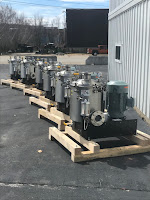
Kady International recently shipped six high speed inline dispersion mills to be used in the Municipal and Industrial waste water industry. Kady manufactures a complete line of batch and continuous flow high speed high energy rotor stator dispersion mills. For more information contact Kady at
207.883.4141.

Inline Dispersion Mills Inline Dispersion Mills Inline Dispersion Mills

Tuesday, October 4, 2016

Top of the Line Lab Mills

KADY International is proud to be a leader in manufacturing industrial grade high speed dispersion equipment. We have been in the industry for almost 70 years and we pride ourselves on continually growing our business through innovation and high quality customer service. KADY International works hard to design, engineer and manufacture high quality mills, mills that can be found in forty-one different countries across the world.

Our lab mills are a fine example of the attention to detail and quality that we put into each and every one of our products. We have two main styles of lab mills. The first is the newly engineered L- 2000 High Speed Dispersion Lab Mill. This mill offers just about unlimited dispersion/mixing combinations and the fresh design incorporates an enclosed shaft which allows for deaerating capabilities. The mill has continuous through put rates of 3-5 GPM, or a batch operation of 1 pint to 3/4 gallons. This is our top entry version of a lab mill. The bottom entry version, otherwise known as Model LB has a batch working capacity of one gallon and is outfitted with all wetted parts in a stainless steel. We even have a vacuum operation available as an option for our Model LB Lab mill in order to better meet your needs. One important aspect of our lab mills is scalability. If we can achieve the results in the lab, we can scale up to pilot and production equipment.

As we’ve said before we have been designing, engineering and manufacturing mills for many years, so you know that you can count on us for high quality and reliability. We encourage you to reach out to us if you have any further questions either through our Contact Us form or by giving us a call at (207) 883 -4141. We are waiting to answer your call and any questions you may have!

Monday, June 27, 2016

Premilling with KADY

Kady introduced the “Premilling” concept over 25 years ago! Premilling works to combine both the premix and early milling stages into one extremely efficient step. Because of this, your whole mixing process can change for the better. Our KADY PreMilling equipment is able to deliver a finer premilled base to your media mill thereby eliminating multiple media mill passes, reducing your production time and equipment cost, saving clean up time and cost, and increasing capacity with higher throughput.

A single high speed KADY Mill can provide a superior homogeneous premix by wetting pigments and producing a dispersion that’s well below a traditional high speed disperser premix particle size in less time. This eliminates multiple media passes which cuts out production time and clean up time. This also means that you can cut back on a few pieces of expensive equipment.

If you want to learn more about the Premilling process, contact us today for further information from our dispersion experts. You can reach us at (207) 883-4141 and ask about our free in-house lab testing or our large inventory of refurbished mills. We have been in the industry for almost 70 years and our mills are in operation worldwide. We look forward to hearing from you and how we can provide a high quality solution that works for your needs and requirements.

Thursday, April 14, 2016

Free On-Site Testing

Over the years KADY International has gained the reputation of being a leader in the industry, and one of the ways that we have been able to secure this reputation is through dedication to our client’s needs. On top of this dedication, we are also deeply committed to providing high quality equipment that will add value to our client’s overall process. In order to achieve both of these KADY is proud to say that we offer on-site laboratory testing to not only ensure that a KADY Mill is the appropriate equipment for your application but to also ensure trouble free scale up to our pilot and production equipment.

Additionally, we offer rental lab, pilot and smaller production mills. This allows our customer to become better acquainted with the equipment in their facilities and perform follow on testing with products other than those run in our lab as a feasibility test.


Customer satisfaction is one of our main goals here at KADY. If you are not happy with your KADY product then we are not happy. With a wide selection and a dedicated staff to help you through every step of the process we are sure to have a solution for your need. Visit our On-Site Testing page for more information about this program or give us a call at 1-800-367-5239 for any further questions you may have. We are ready and willing to put our experience and knowledge to work for you in order to increase your processes overall efficiency and value. 

Thursday, March 3, 2016

Our Mills

Here at KADY international, we manufacture three different types of high speed dispersion mills. Our Top Entry models ( L-2000, 2OT, 25T and 100T), Bottom Entry (OO, OC, 4C, 500B) and our continuous flow mills (OOCF, OCF). All three of these models share the same operating principle with high shear, impact and impingement. Each model uses a similar rotor stator configuration and all have approximately the same top rotor tip speed of around 9000 feet per minute.

This means that each model can be utilized in similar applications from mixing paints and inks to paper, chemicals, mineral products, waste water, cosmetics, pharmaceuticals and many more. While they can all be used almost interchangeably, some models offer more advantages in certain applications than others. For example, paint and ink applications which require multiple color changes for the same machine, are best suited for a top entry mills where multiple tanks are able to be serviced and a separate clean tank can be used. Our bottom entry machines work well in applications that are dedicated to a single product or color. And applications that require vacuum or pressure are typically best suited for bottom entry mills as there is no penetrating dispersion unit through the top of the tank.

If you are unsure of which mill might be best suited for your unique application, be sure to contact us today and we will be happy to help identify which Kady high speed dispersion mill will suit your application best. Please contact Kady International today and learn more about our no charge in house testing service.
KADY International Mills

Tuesday, October 13, 2015

KADY International – Continuous Flow Mills for Waste Water Industry

Flow Mills for Waste Water Industry
These continuous flow mills are a part of 18 mills that are being shipped to the waste water industry this quarter. Here at KADY International, we custom design our mills in order to fit our customers’ needs and specifications. For example these are 40 horsepower mills that will service flow rates in the 10-40 gallon per minute range. We are able to manufacture continuous flow mills with flow rates from 3 gallons per minute to 500 gallons per minute, all depending on your application.

We are proud to be a company that listens to our customers and understands their applications in order to provide them with the best possible products from continuous flow mills to our line of refurbished mills. You know that you can count on the experts at KADY to provide you with the best possible solution at a competitive price.

Friday, September 4, 2015

KADY International Refurbished Mills

Here at KADY International we work hard to provide our customers with top of the line equipment at the best possible price. Often times this means that we will recommend our refurbished mills. These mills are in like-new quality and come with a new machine warranty. We have just recently sold one of our refurbished top entry mills to a fast growing Epoxy/polymer flooring company in the mid-west. 

20T-40

This specific machine is our 20T-40 Model which is a versatile mill with 40 horsepower and has a working capacity of 70 gallons. The standard 20T model comes with 30 horsepower and a working capacity of up to 100 gallons. We are pleased to say that our customer saved upwards of $15,000 over a brand new mill. This customer already has two of our large bottom entry mills and they are adding the smaller 20T for small batch flexibility. 

If you are in the market for a top notch mixer or mill, consider checking out our refurbished mills as they have a new machine warranty and offer you great savings if the machines fit your desired application. 

Tuesday, August 11, 2015

Blenders and Mixers

Blenders and mixers often are mistaken for one another, and rightfully so they both do just about the same thing. So what is the difference between the two? Both mix or blender multiple materials into one complete mixture. But while the difference may be small, there are some subtle differences when it comes to mixing and blending. These differences, while minor are important to distinguish because it will make a difference based on the application you are looking to implement them in.

Mixing is more often used with mixing liquids with other liquids, gasses, or other viscous materials. While blending often deals with the mixing of solids and liquids or even solids with other solids. So while these two actions are fairly similar it is important to know how you might be using them, especially in the manufacturing world. If you purchase a machine that is designed for the mixing of two or more liquids and suddenly you throw a solid in there and expect the same result, you may end up damaging your machine and potentially wasting materials.

So in summary, mixing and blending are pretty interchangeable at the surface level or in day to day conversation. But when you get into the details and take into account the value they bring to manufacturing companies, it is important to distinguish between the two. Failing to do so may result in machine downtime, loss of materials and loss of profit.

Friday, August 7, 2015

Continuous Mills for the Water and Wastewater Industry

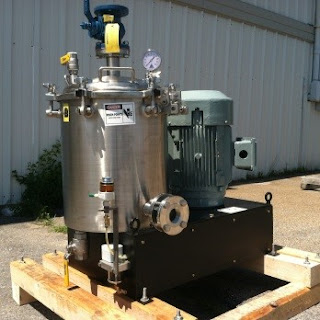
continuous mill1These past several years we have been focused on designing and manufacturering high quality mills for one of the largest water and wastewater companies in the world. This project will put approximately 30 of our mills into the waste water industry this year and opens the door for more in the future.
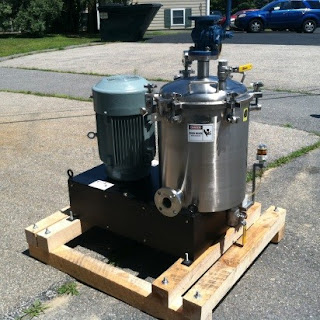
This project will see our mills all over the globe, the primary focus is the East Coast but a few of these mills will make their way to Singapore and the United Kingdom this year. This particular model is one of our standard models with 40 horsepower and can operate in the 5-50 gpm flow rate range. This makes it ideal for the water and wastewater application our client is using them for.

continuous mill2We are proud to say that this type of continuous flow mill can be used in a number of different industries such as the paint, ink, paper, chemical, mining, minerals, and many more industries. We have been in the business for almost 70 years and with each new project we get more and more excited for the industries we are serving and the ways our clients are using all of our products from our continues flow mills to our top and bottom entry batch mills.

Thursday, June 25, 2015

Drum Mixers

Most children love playing with trucks and toy construction equipment. Some have just the toys, while others watch movies with talking cranes, mixer trucks, and backhoes. My brother’s favorite toy was his dump truck that could haul dirt from one area of the play box to the other. My grandfather was a mechanic, which lead him to take tools and pretend to fix things on his equipment. Either way, he began as a child wanting to play and fix the equipment to being an adult who operates and fixes the same toys.

Although most children are not interested in playing with mixer trucks as compared to other construction toys, they are actually very interesting as an adult. There are a variety of mixers that range in size from large industrial mixers to rotating drum trucks and cement mixers that are pulled behind a car. The most common rotating drum mixer that comes to mind is a cement mixer.

In a cement mixer, water, aggregate such as pea gravel or sand is blending to make concrete. This type of mixer can be purchased or rented for personal or commercial use. It may be a good investment to purchase if you plan on completing more than one job, but if you know what you are doing and want to do-it-yourself, renting might be the better option. One thing’s for certain, you need to do business with those that have experience and dedication to customer service, as you will find with Kady International.

Thursday, June 4, 2015

4 Types of Blades for Portable Mixers

What is a portable mixer? A portable mixer is just as it sounds—it is a mixer that can be moved with ease, brought from one workstation to another, a smaller design vs larger industrial mixers, and can be used on the go, among other things. The average blades for industrial portable mixer are thin and small for mixing miniature batches on site. Just like blades for larger mixers, blades for portable mixers are shaped and designed for different mixture results. Below you will find descriptions of the most common portable mixing blades:

Dynaflow: A Dynaflow blade is shaped like a rectangle that is gradually thinning. The center of the mixer is where the thickest part of the blade is. There is a slight angle to the blades for optimal mixing of the various ingredients. The Dynaflow blade is designed to break up lumps and prevent excessive frothing of the mixture.

Propeller: The propeller blade is shaped like the blades on an airplane or marine engine propeller. If you do not recall these types of blades, they are like petals on a sunflower that surround the core of the flower. The propeller blade is designed to mix liquids quickly and efficiently. The mixing motion created by this blade can cause frothing, which can also thicken liquids. This design allows the mixer to cut deep into thicker liquids and provide a churning action that is ideal for mixing a variety of liquid types.

Pitch: A pitch mixing blade is designed with angled rectangle blades located at the tip of the mixer, making it useful for cutting through lumps, as well as a homogenous mixture. The pitch blade is used for both liquids and dry materials.

Radial: A radial blade is another rectangle blade design, but with no angle and a 90 degree placement of each blade relative to one another. This type of blade is better used for mixing lumpy mixtures and those with dry materials. The radial blade should not be used if you want a thicker mixture with a higher volume.

Tuesday, April 7, 2015

Large and Small Scale Mixers

Part of the manufacturing process used in many industries such as food, chemical, cosmetic, and adhesive, includes mixing contents together to make materials and other products. Industrial mixers are usually very large, allowing them to mix large batches of product all at one time. Also, larger mixing tanks allow companies to produce products at higher rates in short periods of time.

Mixing is a common first step of many in the manufacturing process to produce specific products chosen by individual companies. There are several different kinds of mixers that industries use to mix their batches, to include: drum, food, vacuum, batch, and static mixers. They also have different options for mixing blades (some detachable) and how the mixing blade will rotate (based on what is being mixed). Some materials require a constant movement by using a continuous flow mixer while some materials require a static mixer, where the mixer component does not move. In addition there are industrial mixers that are set to mix, disperse, emulsify, homogenize, mill, or blend products for short and long periods of time.

Businesses that only need small batches of product are not required to buy the larger industrial mixers since there are many size options available. They can also buy mixers that are specified for multi-use of varying ingredients with detachable blades, allowing the company to save space and money for their mixing needs. From large industrial companies with hundreds of mixers to small scale mixers designed for personal use, customers will find that mixers provide many benefits and solutions for hard to mix ingredients and the production of products.

Wednesday, March 18, 2015

Mix it Up with Emulsifiers

Not to be confused with the emulsifier agents such as eggs, emulsifiers are specific mixers used to mix two liquids that cannot be joined in a homogenous solution. The difference between an emulsion and a solution is that there is no dissolving of a solute into a solvent. Instead, emulsions are mixtures of materials in which there is a near-even dispersion of all of the involved materials throughout the mixture. Emulsifiers are the tools that are used to create emulsions.

To achieve its purpose, emulsifier mixers use high-speed rotation and centrifugal force to get emulsification. There is a large need for emulsifiers throughout industrial industries due to the variety of industrial processes and operations in which there is a need for the mixture of liquids. They can be used as tank circulators in the processing and storage of high-viscosity chemicals. Outside of the context of chemical processing, emulsifiers can also be used in the food and beverage industry as well as in research and development applications.

Emulsifiers used for chemical storage must be capable of continuous operation. If left alone for long enough periods of time emulsions are known to separate. Once the constituent materials in emulsion become separate, the mixture ceases to be an emulsion and will need to be mixed again to regain the status. There’s no question that emulsifiers are very important tools for industry, and as long as there is need for the processing and storage of emulsions, industry will need emulsifiers.

Tuesday, February 17, 2015

Paddle Mixers

Paddle mixers are almost identical to that of the bottom half of a canoe or kayak paddle. The paddle portion is the thick rectangular half or the end one would stick in the water. This part of the paddle is flat and rather thin in thickness, but is very durable. The paddle mixer is used for mixing heavy solids or when mixing wet and dry ingredients. These types of mixers are usually used for mixing dry materials, like minerals, but can also mix rubbers, plasters, and chemicals.

Placement of each paddle head is strategically placed and distributed so that the best mixing can take place. When mixing, the paddle heads rotate and mix the ingredients in a rectangular shaped bin. More elaborate bin mixers allow paddles to be interchanged for more than one type of mixing.

Industrial mixers come in many other types also such as a vacuum mixer, jet mixer, mobile mixer, screw blender, ribbon blender, double cone blender, high shear rotor stator, continuous processor, double and triple shaft and many more. The paddle mixer, like many of the mixers mentioned, has its own unique characteristics that provide different mixing patterns. Mixers play a very important role in the manufacturing industry when material requires mixing before the production of a product can begin.

Saturday, January 10, 2015

Kady Continuous Flow Mill Headed to Alabama

Over the past few weeks our teams have been working on a special continuous flow mill system. The system is comprised of a 1200 gallon, 350 horsepower continuous flow mill, a control panel, and some ancillary equipment, and it is currently on its way down to Mobile, Alabama, where it will be used in a bitumen terminal. Our equipment will play a crucial role in reliably and efficiently blending and dispersing bitumen for use in asphalt concrete and roofing applications.

This specially designed system utilizes a 1200 gallon vessel with multiple side and bottom ports. Materials are pumped in through the bottom ports of the vessel and blended. The upper side ports are used to discharge the materials from the vessel, and each is located at a different volume level. This mill design provides flexible retention times, so the mill can be reconfigured based on application needs. When the higher ports are used, it takes more time for the materials to be discharged, so the materials are mixed and blended longer. The materials, then, leave the vessel with more energy input which eliminates the need for recirculation and multiple passes through the system. Additionally, the mill can be reliably used for flow rates up to 750 gallons per minute, reducing the need for many premixing and pretreatment tanks and pumps.

At Kady International, we have been manufacturing industrial mixing equipment for almost 50 years, and this continuous flow mill is a testament to our continued dedication to quality and reliability.

Flow mill on truck


Flow mill on location


High Shear Mixers

There are a variety of substances and liquids that do not mix well together, such as oil and water. Even after being mixed, leaving a jar to sit untouched for a while, the water and oil will eventually completely separate with the oil rising to the top or the jar and the water sinking to the bottom. In such cases where two substances do not mix, manufacturing companies will use a high shear mixer.

A high shear mixer is a type of mixer that is designed to fully merge solid, liquid, or gas elements that traditionally would not mix together. A mixing method, called shear straining, will move two types of fluid across each other at different speeds. This method creates an area of deformation in the contact area between the two fluids, resulting in a homogeneous substance. The shear mixers mix at very high speeds in order to combine the two substances.

There are a variety of shear mixers including: inline, batch, and ultra-high mixers that are used to mix chemicals and other materials together to form one substance.

Thursday, November 20, 2014

Choosing the Right Mixing Tank

Mixing is a huge part of many different industrial applications. Large scale mixing tanks create the ability to mix products in large batches and in shorter periods of time for industries ranging from food products to metal alloys and cement mixtures.

The most popular type of mixing tank is made of stainless steel and used in mixing food-related products and those that require a high level of sanitation and bacterial-resistance. Stainless steel metal keeps the inside of the tanks clean, prevents materials from sticking to the walls of the container, is resistant to heat and is extremely durable. For these reason and many others, more companies choose stainless steel mixing tanks than many other kinds of tanks.

Tank design is dependent of the use. Mixing tank manufacturers can create tanks to whatever specification the purchaser desires and can recommend different styles based on their needs, although many mixing tank designs are variations on four main designs. These designs include:

Open Top Mixers: Open top mixers are ideal for mixing ingredients that do not need extremely sanitary conditions. The open top design makes it easy to add new materials when necessary while the machine is mixing. Many general industrial mixing procedures occur in open top mixers.

Sealed or Pressurized Tanks: Sealed and pressurized tanks are ideal for mixing materials that require a high level of sanitation, such as in food preparation. Pressurized tanks can agitate materials together under high pressure, fusing different material molecules into one seamless mixture.

High Viscosity Tanks: High viscosity tanks are designed to mix viscous liquids, such as oil and other viscous liquids. These tanks use special agitators to mix the different materials together.

IBC Totes: IBC totes have a square shape rather than a rounded shape like many mixers. The totes are designed to store and blend liquids together in a sealed environment and are often used for delicate materials and food or beverage production.

Monday, November 3, 2014

It’s Milk Not Cream.

Not so many years ago, milk was derived from a family cow or local farm. Today, you can go to any grocery or convenience store and pick up a gallon in multiple varieties. From the farm to the store, there are many different steps taken in producing homogenized milk. At the farm, the milk is collected from a plethora of cows and amassed inside giant tanks.

Not every cow’s milk produces the same milk quality, where one area in the container may have a higher fat content and another very little. To accomplish a smooth and even mixture, homogenizers are used to blend those milk ingredients together. Imagine picking up two gallons of milk where one has a thick consistency and the other almost like water. These industrial mixers are used in the giant milk containers and can ensure that everyone is consuming the same mixture of milk, also making it easier to correctly label the milk ingredients on the containers.

Like most food industry mixers, milk homogenizers are made of stainless steel. A typical makeup of a homogenizer consists of a holding tank, a motor and an array of rotating impellers. Like the job of an emulsifier, homogenizer mixers break up globules of fat in the milk with a device that pushes the substance through tiny holes with high pressure, forcing the liquid to fully mix. If homogenization was not part of the process, the separation of liquid from fats would cause the formation of cream.